Charge Inspector - Cap and Collar
Caps and collars in an allocation are used to control the overall amounts charged to certain accounts or assets. The Cap and Collar tab in the Charge Inspector shows how the amounts change due to these restraints.
A collar is a percentage or dollar range that restricts the difference between the new charge and the prior year's charge. Collaring can only be applied to full distribution coverages and will prevent extreme fluctuations in charges from one year to the next.
Caps can be applied to either full distribution or fixed rate coverages and will supersede collars in the calculation. Capping is applied at the account level and is evenly distributed to assets.
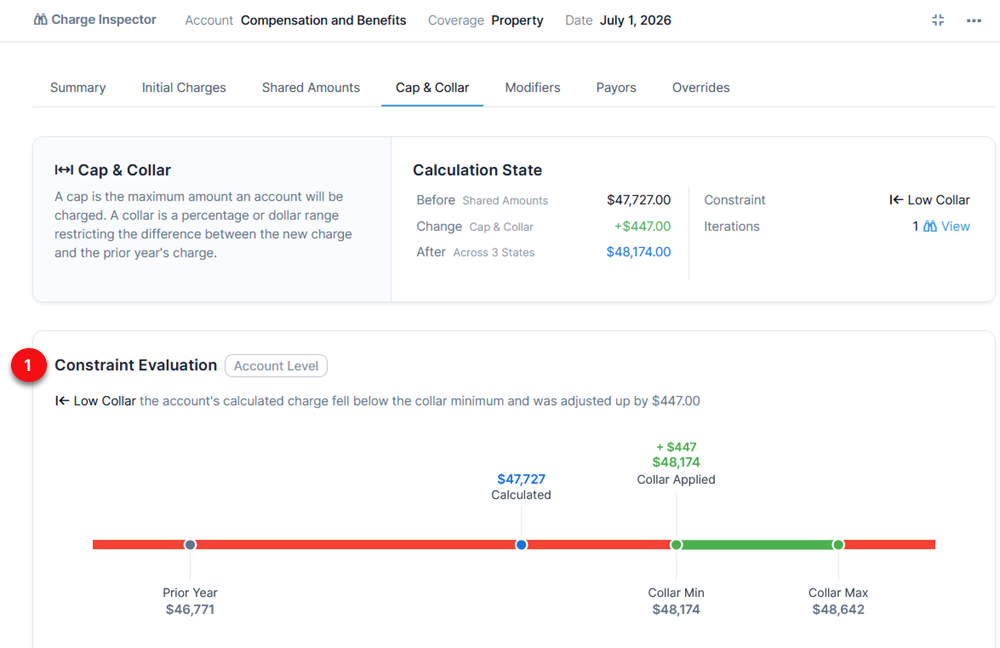
1. The Constraint Evaluation shows the comparison between the prior year's charge and the current charge and the type of constraint applied. The chart shows the specific adjustment to the charge.
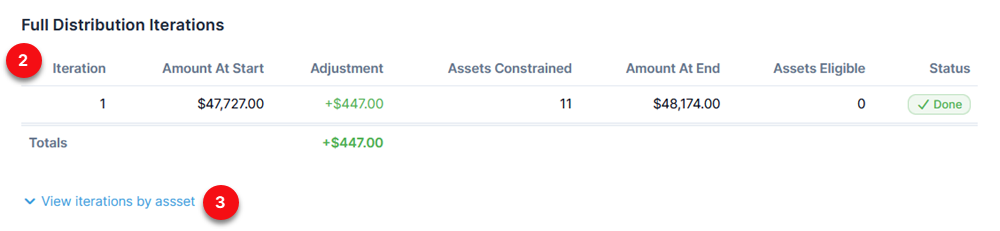
2. The Full Distribution Iterations summary table shows how the target amount changes according to the cap and collar rules applied and the sequence of calculations. Not all charges will be affected by collars or caps.
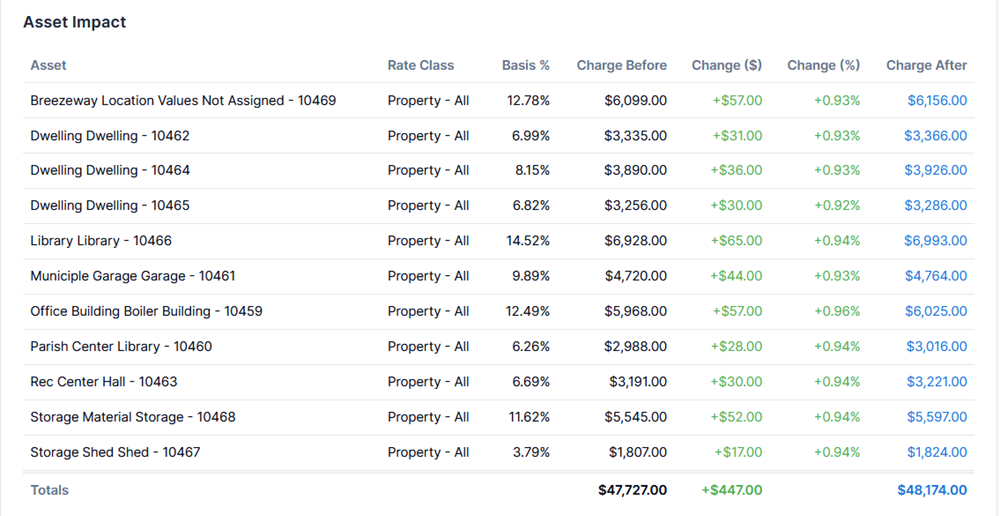
3. The Full Distribution Iterations by Asset table, available using the link at the bottom, shows how collars and caps are applied at the asset level that alter the charges.